Right-size recommendations
We size for the home and duct system, not the old furnace nameplate. Oversizing can cause short cycling and temperature swings; undersizing can leave rooms cold on the chilliest nights.
Serving Fallbrook, California & surrounding areas
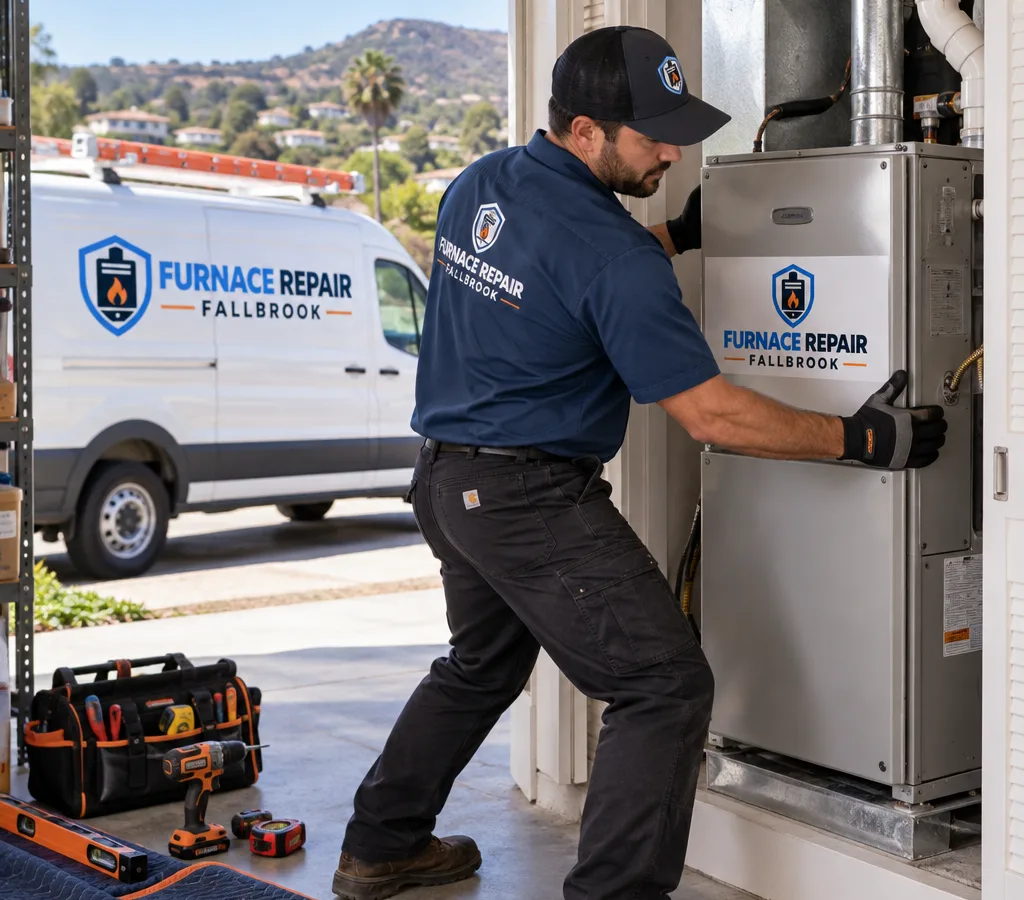
Furnace replacement in Fallbrook, California
When your heater is unreliable, loud, or expensive to run, a properly sized new furnace can bring comfort back fast. We replace gas furnaces in Fallbrook homes with clear options, a written scope, and clean workmanship from removal through start-up.
Plan the replacement correctly
If you are searching for furnace replacement Fallbrook homeowners can trust, you are usually dealing with one of three situations: a furnace that will not heat reliably, a system that needs frequent repairs, or an older unit that is driving up utility bills. A replacement is a construction project as much as it is a mechanical one. The best results come from correct sizing, safe gas and venting work, and careful commissioning so the new furnace runs the way the manufacturer intended.
At Furnace Repair Fallbrook, our replacement work focuses on the parts that make or break comfort and safety: load-based sizing—not just matching the old model—proper return air and supply airflow, correct venting and combustion air, code-compliant gas piping connections, and tested controls. As an experienced furnace team in Fallbrook, CA, we start by understanding how your home is actually used and how the current system performs, then we give you a clear plan for the new installation.
Fallbrook homes often place equipment in a garage, attic, or hall closet. Each location changes the scope. Garages may need platform work and attention to vehicle impact clearances. Attic installs add access and condensate routing considerations if you choose a high-efficiency furnace. Closet installs often hinge on return air path, door grille sizing, and venting details. We walk you through what applies to your layout before any work begins.
Complete installation scope
We size for the home and duct system, not the old furnace nameplate. Oversizing can cause short cycling and temperature swings; undersizing can leave rooms cold on the chilliest nights.
We verify the venting method and route are appropriate for the new unit, and we confirm safe combustion air where required for the installation type.
A new furnace can only perform if airflow is correct. We look for return restrictions, dirty or undersized filters, and duct issues that would limit capacity.
Old equipment is removed carefully, the area is protected, and the new furnace is set level and secure with tidy connections and accessible service clearances.
We start up the furnace, verify operation across heat stages, check temperature rise, and confirm basic safety controls and proper thermostat communication.
You get a clear description of what is being replaced and what stays, including any duct, venting, or electrical items that affect the final install.
Match equipment to the home
Most replacements come down to three decisions: efficiency level, heat staging, and how the new furnace will fit your existing ductwork and venting.
Efficiency: Standard-efficiency furnaces, commonly 80% AFUE, often use metal venting and can be a straightforward swap in many garages and closets. High-efficiency furnaces, commonly 90%+ AFUE, use PVC venting and create condensate that must be drained properly. High-efficiency can be a good match when the installation allows a sensible vent route and a reliable condensate path.
Staging and comfort: Single-stage furnaces run at one output. Two-stage and variable-speed blower systems can improve comfort in mild weather by running longer at lower output, and they can help with air mixing when duct design is marginal. The right choice depends on your home's layout, thermostat control, and the condition of the duct system.
Fit and compatibility: We check plenum transitions, filter location, return air sizing, and whether the existing venting method is acceptable for the new model. If your current furnace has had repeated limit trips, noisy operation, or hot-and-cold rooms, we treat that as a diagnostic clue and address the cause during replacement planning.
If you are also deciding between repair and replacement, our furnace repair service in Fallbrook can help you confirm whether the current unit's issues are isolated or a sign of end-of-life problems.
Assessment through walkthrough
We inspect the existing furnace, duct connections, venting, gas and electrical hookups, and the installation location—garage, attic, or closet. We also note comfort complaints room by room.
You get furnace options that fit the space and venting constraints, plus a scope that spells out what will be replaced, what will be modified, and what is excluded.
We protect the work area, disconnect utilities safely, remove the old unit, and prep transitions so the new furnace sits correctly and service access is maintained.
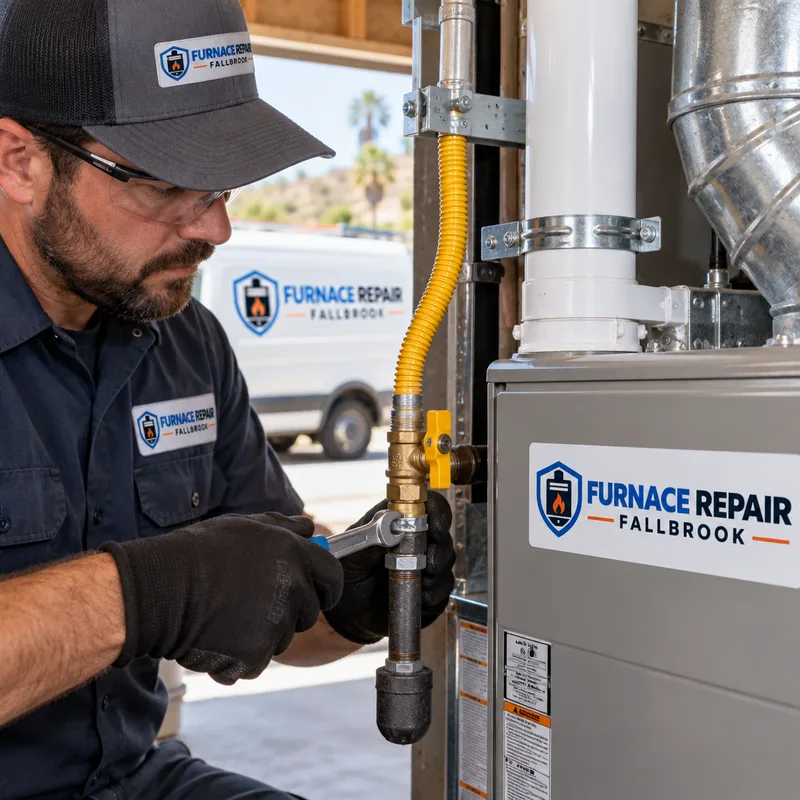
We set the new furnace, connect gas and electrical, complete venting per the selected efficiency type, and verify filter and return air setup for proper airflow.
We run the system through heat cycles, confirm thermostat operation, check temperature rise and blower settings, and verify safe, stable operation before we leave.
We show you filter size and replacement interval guidance, explain normal sounds and startup behavior, and answer questions about operating modes and thermostats.
Replacement pricing
Furnace replacement in Fallbrook typically ranges from about $5,500 to $12,500 for a like-for-like gas furnace install, depending on efficiency level, install location, and the amount of venting or duct transition work needed. A straightforward 80% AFUE swap with minimal modifications usually falls at the lower end, while high-efficiency equipment with new PVC venting, condensate drainage, or significant sheet metal work trends higher.
Your final price changes most with furnace size and staging, venting route complexity, electrical or gas line updates, permit requirements, and whether airflow issues require duct corrections. Exact pricing is confirmed after an on-site evaluation of the existing furnace, venting, and duct connections.
Homeowner experiences
“Our old furnace kept shutting off on cold nights. The replacement was explained clearly, the install area was left clean, and the new system heats more evenly than the old one ever did.”
“We replaced an aging garage furnace and had questions about venting and sizing. The crew answered everything in plain terms and the startup checks gave us confidence it was done right.”
Plan with clear answers
Replacement is usually the better call when repairs are becoming frequent, parts are difficult to source, or the furnace has major issues like a failing heat exchanger, recurring limit trips, or unsafe venting. If the unit is older and you are paying for repeated service visits, it often makes sense to put that money toward a new furnace with a fresh warranty and properly set airflow.
Many furnace replacements can be completed in a single day when the venting and duct connections are straightforward and access is reasonable. If the job requires rerouting venting for a high-efficiency furnace, adding a condensate drain, or rebuilding transitions, it can extend into a longer or second-day scope.
Many jurisdictions in California require permits for replacing gas-fired appliances and making venting or gas line changes, and inspections help verify safe installation. We can review whether a permit applies based on the scope and the installation type—garage, attic, or closet—during your estimate.
Often yes, as long as the duct system can deliver the airflow the new furnace needs and the return air setup is not restricted. During the assessment we check filter location, return sizing, and signs of duct leakage or collapse so the new unit is not set up to fail.
An 80% AFUE furnace can be a practical choice when you want a simpler swap and the existing venting path is in good condition and appropriate for the new model. A 90%+ AFUE furnace can be a good fit when there is a clear route for PVC venting and a reliable way to manage condensate drainage; the right answer depends on the installation constraints and how long you plan to stay in the home.
Not always, but some two-stage and variable-speed systems perform best with a compatible thermostat that can control staging and fan options. We will tell you up front if your existing thermostat limits the furnace features you are paying for.
Plan your replacement
Tell us what your current system is doing and where the furnace is located—garage, attic, or closet. We will inspect the setup, confirm sizing and venting requirements, and provide an upfront quote for your furnace replacement in Fallbrook.